
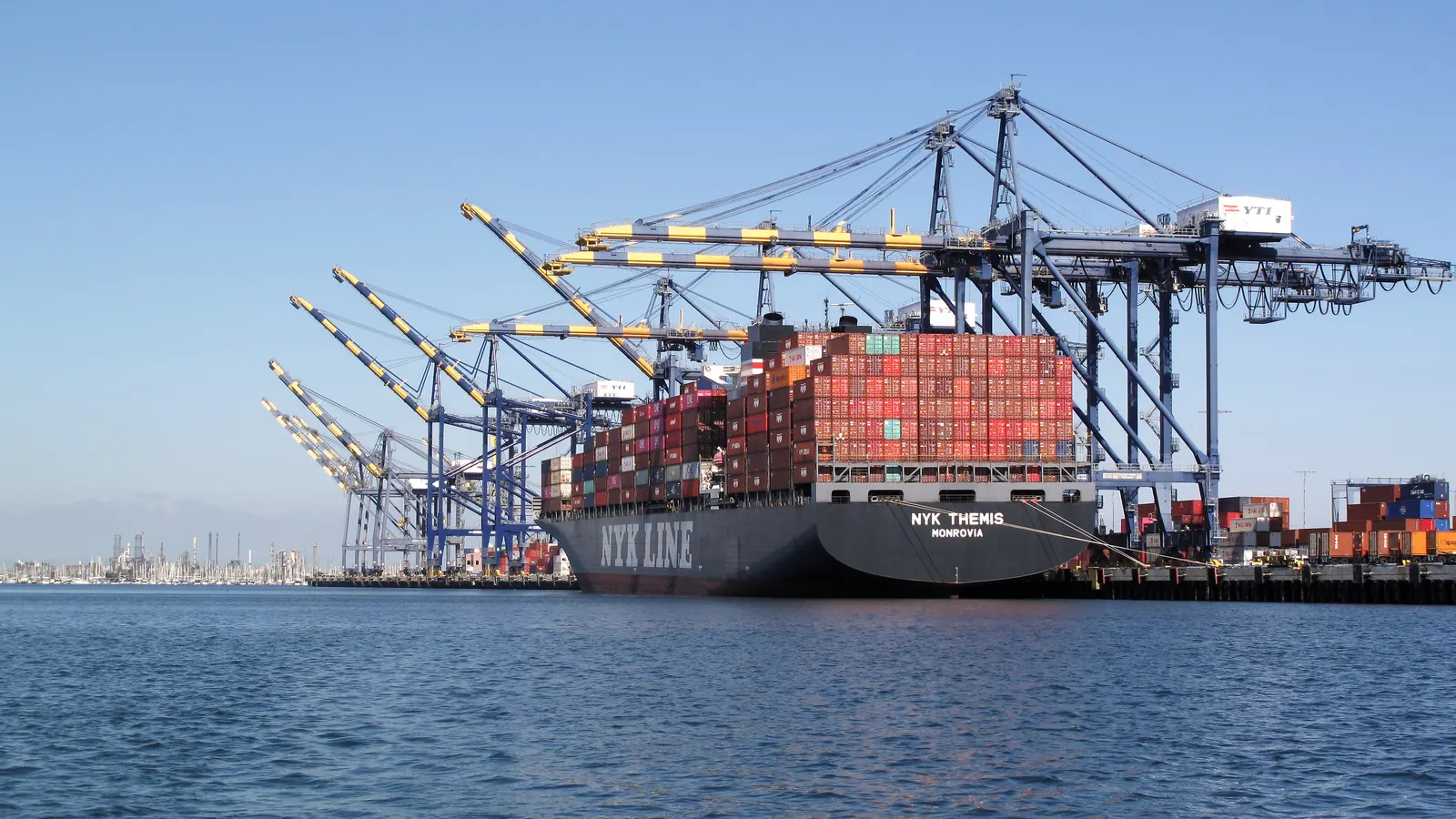
Car prices from overseas are quoted on a term — FOB, CFR (often written C&F or CNF) or CIF. The term decides who pays for the voyage and who insures it. It does not decide who carries the risk at sea: under all three, that passes to the buyer at the port where the car is loaded.
The short version
- The three terms are Incoterms rules, published by the International Chamber of Commerce; the current edition is Incoterms 2020.
- Under FOB, CFR and CIF the risk passes on board at the port of shipment.
- CIF requires only minimum insurance, equivalent to Institute Cargo Clauses (C).
- Many customs authorities value an import on a CIF basis, whichever term you bought on.
Incoterms, in one paragraph
FOB means the seller's job ends when the car is loaded on board the vessel you nominate; you pay the freight and insurance. CFR means the seller also pays the freight to your named port but you insure the voyage. CIF means the seller pays the freight and buys minimum insurance for you. In all three, if the car is damaged after loading, it is your loss to recover — from the insurer, not the seller.
FOB, CFR and CIF side by side
| FOB — Free On Board | CFR — Cost and Freight | CIF — Cost, Insurance and Freight | |
|---|---|---|---|
| Seller delivers | On board at the port of shipment | On board at the port of shipment | On board at the port of shipment |
| Freight paid by | Buyer | Seller | Seller |
| Insurance bought by | Buyer (if wanted) | Buyer (if wanted) | Seller, minimum cover |
| Risk passes | On board, port of shipment | On board, port of shipment | On board, port of shipment |
| Export clearance | Seller | Seller | Seller |
| Import clearance, duty | Buyer | Buyer | Buyer |
Incoterms 2020, International Chamber of Commerce. FOB, CFR and CIF are for sea and inland waterway transport.
The ICC's own summary of the rules is on the Incoterms 2020 page. "CNF" and "C&F" are trade shorthand for CFR and are not separate rules; if a contract uses them, make sure it means CFR.
Where the risk passes, and why it is not where the cost passes
Under CFR and CIF the seller pays for a voyage whose risk belongs to you. If the vessel is delayed, the car is damaged in a storm or it is lost overboard, the seller has done its job by loading it. Your remedy is the insurance policy, and against the carrier only where the carrier is at fault and within the limits of the contract of carriage. That is why the insurance question matters even on a CIF purchase.
What CIF insurance does and does not cover
- Minimum clauses. Incoterms 2020 requires a CIF seller to buy cover complying with Institute Cargo Clauses (C), which insure named major events rather than all risks.
- Minimum value. The cover must be at least the contract price plus 10%.
- Upgrades are by agreement. A buyer who wants (A) clauses — all risks, subject to exclusions — must agree it with the seller, or buy their own cover.
The clauses are compared in marine insurance for imported cars.
Which value does your customs use?
Whatever term you bought on, many customs authorities value the import as cost plus freight plus insurance to their border. On an FOB invoice, the freight and insurance are added to it; on a CIF invoice, they are already in it. Choose your country to see the basis its authority uses.
| Country | How customs values the car |
|---|---|
| The customs value is the price paid plus transport and insurance to the UK border, and duty and VAT are worked out from it. | |
| Customs duty and VAT are worked out on the customs value — the invoice price plus transport and insurance — while VRT is worked out on Revenue's OMSP. | |
| Registration tax works from Transport Malta's registration value for the car, which the government's online calculator produces. | |
| The customs value is the purchase price plus freight and insurance to the port or airport of entry. | |
| KRA values a used car against its own published motor-vehicle valuation schedule rather than the invoice you paid, so two importers of the same model pay the same duty. | |
| TRA assesses duty and taxes on the customs value of the car; confirm with TRA how it values the exact model before you price it. | |
| URA assesses the car's customs value at entry; confirm with URA how it values a used car of your model and year. | |
| MRA values a used car from the FOB value of identical vehicles imported before, reduced by 9% for the first month of use and 1% for each month after, to a maximum of 50%. | |
| Duty is assessed on the car's customs value at entry; confirm the basis for your model with the Jamaica Customs Agency. | |
| Duty is assessed on the car's customs value at entry; confirm the basis with the Customs and Excise Division. | |
| New Zealand Customs works GST out on the car's value plus freight and insurance to New Zealand, and any duty payable. | |
| Customs duty is assessed on the car's CIF value — cost, insurance and freight — at entry. |
Choose a country for its full rules and the official sources, checked 27 October 2026.
How customs values the car · United Kingdom
The customs value is the price paid plus transport and insurance to the UK border, and duty and VAT are worked out from it.
- A price in a foreign currency is converted at HMRC's published monthly rate for the month of import, not at the rate your bank gave you.
- HMRC publishes each month's rates on the penultimate Thursday of the month before.
Sources for United Kingdom, checked 27 October 2026:
- Importing vehicles into the UK — GOV.UK
- Exchange rates for customs and VAT — UK Integrated Online Tariff
How customs values the car · Ireland
Customs duty and VAT are worked out on the customs value — the invoice price plus transport and insurance — while VRT is worked out on Revenue's OMSP.
- Because VRT uses the Irish open-market price rather than the purchase price, a car bought cheaply abroad does not pay less VRT for it.
Sources for Ireland, checked 27 October 2026:
How customs values the car · Malta
Registration tax works from Transport Malta's registration value for the car, which the government's online calculator produces.
Sources for Malta, checked 27 October 2026:
- SOPV 02 — Registering and licensing of new and used motor vehicles (January 2026) — Transport Malta
- Vehicle registration tax calculator — Government of Malta
How customs values the car · Cyprus
The customs value is the purchase price plus freight and insurance to the port or airport of entry.
Sources for Cyprus, checked 27 October 2026:
- Vehicles from countries outside the European Union — on payment of import duty and VAT — Cyprus Customs & Excise Department
How customs values the car · Kenya
KRA values a used car against its own published motor-vehicle valuation schedule rather than the invoice you paid, so two importers of the same model pay the same duty.
- KRA's procedure page links its motor-vehicle valuation template, effective 1 July 2023. The trade usually calls it the CRSP (current retail selling price) schedule.
Sources for Kenya, checked 27 October 2026:
- Importation procedure for motor vehicles — Kenya Revenue Authority
How customs values the car · Tanzania
TRA assesses duty and taxes on the customs value of the car; confirm with TRA how it values the exact model before you price it.
Sources for Tanzania, checked 27 October 2026:
How customs values the car · Uganda
URA assesses the car's customs value at entry; confirm with URA how it values a used car of your model and year.
Sources for Uganda, checked 27 October 2026:
- Uganda Revenue Authority — URA
How customs values the car · Mauritius
MRA values a used car from the FOB value of identical vehicles imported before, reduced by 9% for the first month of use and 1% for each month after, to a maximum of 50%.
- Where no such value exists, MRA starts from the retail price when new in the exporting country, less 5%, then applies the same monthly reduction.
- For cars from Japan, MRA assesses the FOB value through its online second-hand vehicle valuation system.
Sources for Mauritius, checked 27 October 2026:
- Customs — motor vehicles — Mauritius Revenue Authority
How customs values the car · Jamaica
Duty is assessed on the car's customs value at entry; confirm the basis for your model with the Jamaica Customs Agency.
Sources for Jamaica, checked 27 October 2026:
- Motor vehicle — general information — Trade Board Limited
How customs values the car · Trinidad and Tobago
Duty is assessed on the car's customs value at entry; confirm the basis with the Customs and Excise Division.
Sources for Trinidad and Tobago, checked 27 October 2026:
- Customs and Excise Division — Ministry of Finance
How customs values the car · New Zealand
New Zealand Customs works GST out on the car's value plus freight and insurance to New Zealand, and any duty payable.
Sources for New Zealand, checked 27 October 2026:
- Fact sheet: importing goods for business or commercial use (April 2026) — New Zealand Customs Service
How customs values the car · Sri Lanka
Customs duty is assessed on the car's CIF value — cost, insurance and freight — at entry.
Sources for Sri Lanka, checked 27 October 2026:
- National Imports Tariff Guide 2025 — Chapter 87 — Sri Lanka Customs
- Importation of a used motor vehicle under import control licence — Department of Import and Export Control
Choosing the term to buy on
A practical rule
Buy FOB when you can book and insure the voyage better than the seller can — typically with volume on a regular route. Buy CFR or CIF when the seller has access to sailings you do not, and then check the insurance clauses, the freight's inclusions at your port, and who pays destination terminal charges.
The term appears on the invoice and is reflected on the bill of lading; both need to match. Put the result into your landed-cost calculation. When you have cars and a destination, you can send a dealer inquiry. The full process is in the dealer's guide to sourcing cars overseas.