
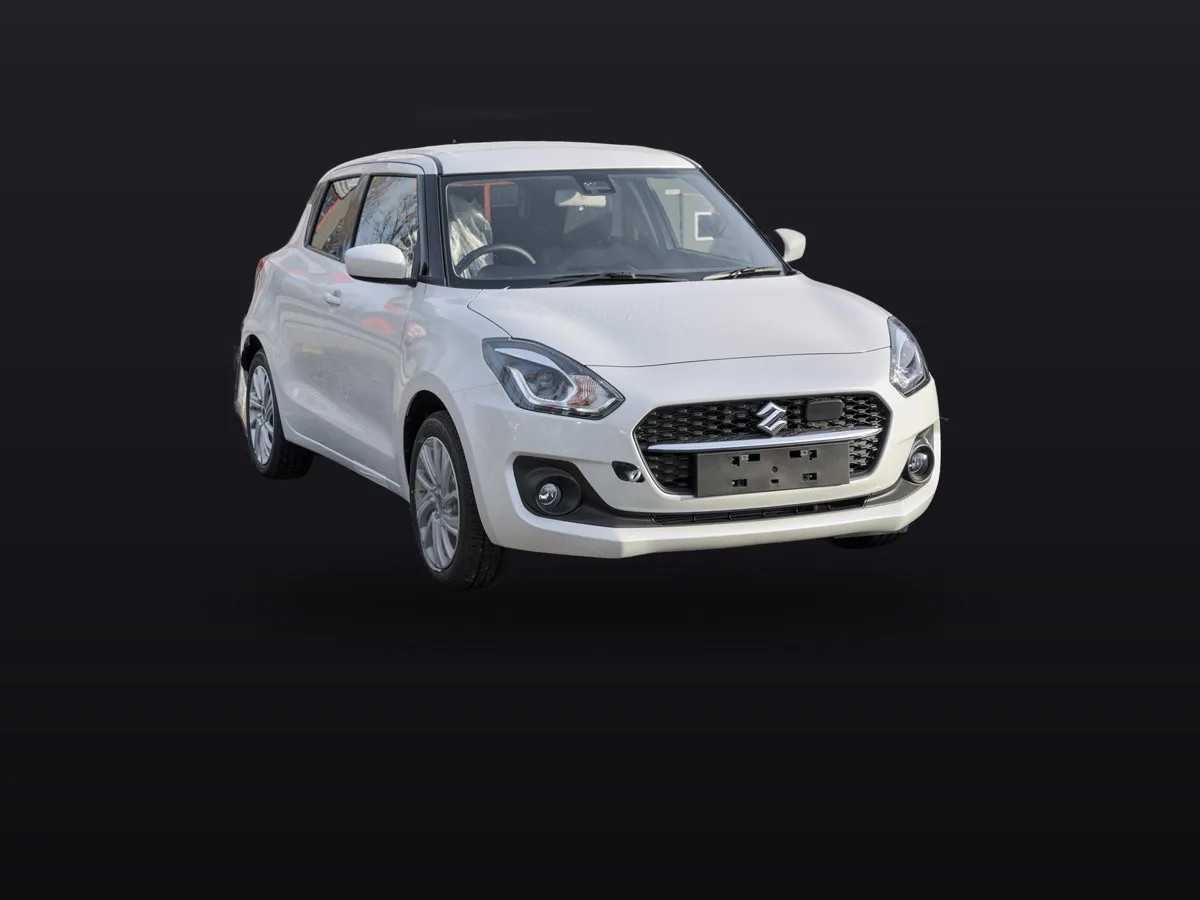
Maruti Suzuki launched the facelifted Baleno on 5 September 2026 from ₹6.10 lakh ex-showroom — ₹20,000 above the car it replaces. The specification change worth noticing is not the grille. It is a Level 2 driver assistance suite arriving on a car that starts under ₹6.5 lakh, which is a long way down the price ladder for that equipment.
The short version
- Launched 5 September 2026 from ₹6.10 lakh ex-showroom, up ₹20,000 on the outgoing car.
- Z12E 1.2-litre three-cylinder naturally aspirated petrol producing 83 hp and 112 Nm, with five-speed manual or AMT.
- Factory-fitted CNG produces 70 hp and 102 Nm on a five-speed manual.
- Claimed economy of 23.80 kmpl manual and 24.77 kmpl AMT.
- Higher grades gain a Level 2 ADAS suite with adaptive cruise, lane-keep assist and emergency braking.
What changed
₹6.10 lakh
From, ex-showroom
83 hp
1.2 petrol, 112 Nm
24.77 kmpl
Claimed, AMT
| Petrol | CNG | |
|---|---|---|
| Engine | Z12E 1.2-litre three-cylinder naturally aspirated | Same engine, CNG mode |
| Output | 83 hp, 112 Nm | 70 hp, 102 Nm |
| Transmission | 5-speed manual or 5-speed AMT | 5-speed manual |
| Claimed economy | 23.80 kmpl manual, 24.77 kmpl AMT | Not stated in the launch material we read |
India-specification figures as reported at launch on 5 September 2026. Checked 10 September 2026.
Externally it is a facelift: revised headlights, a repositioned Suzuki badge, new daytime running lights, a larger grille and a redesigned bumper. Inside, the higher grades gain a 22.86 cm SmartPlay Pro+ touchscreen, wireless Android Auto and Apple CarPlay, and a wireless charging pad with active cooling.
Adaptive cruise, lane keeping and emergency braking on a car that starts at ₹6.10 lakh. That is the story, not the bumper.
Why a small Indian hatchback matters to an importer
Because it is the shape of car that most of our destination list actually buys. A sub-1.2-litre petrol hatchback with a manual gearbox, low running costs and a service network is the volume vehicle in Sri Lanka, across East Africa and through much of the Caribbean, and the segment is far more sensitive to landed cost than anything above it.
It is also a segment where a small tax change moves the decision. When Tanzania brought vehicles up to 1,000cc into excise at 5% this July, it was operating on exactly this end of the market. A 1.2-litre Baleno sits just above that threshold, which is the kind of detail that decides a dealer’s specification before any showroom conversation happens.
What the price means in your money
Indian ex-showroom pricing includes GST and excludes registration, road tax and insurance. It is not an on-road figure and it is not an export figure. The conversion below exists so a reader outside India can size the car against their own market.
₹6.10 lakh, converted
ECB euro reference rate of 110.8225 rupees, 9 September 2026
Then the destination does its work. A car with a purchase price near €5,500 can land at two or three times that figure in a market with heavy excise banding, which is why the purchase price is close to meaningless on its own in this segment. Our Sri Lanka tax guide shows how far that multiple can run.
The cheap car is where tax hurts most
On an expensive vehicle, duty and excise are a large fraction of a large number. On a cheap one they are frequently a larger fraction of a small number, because banded charges and fixed levies do not scale down. Never assume the small car is the safe import. Run the actual band.
Can you import one?
- Right-hand drive as standard. Built for India, so the hand is not the obstacle in any right-hand-drive destination.
- New car, so no age bar. The used-import age limits in Kenya, Sri Lanka and the Caribbean do not apply to a 2026 vehicle.
- CNG variants need a separate permission check. Compressed natural gas fuel systems carry their own certification and inspection requirements in several markets, and a few will not register a factory CNG conversion without local approval. Settle that before you order one.
- ADAS calibration is a service question. Level 2 systems need recalibration after windscreen replacement or a front-end repair. In a market with no franchised Maruti Suzuki presence, ask where that is done before you commit.
Does this apply to you?
If you are a dealer selling small hatchbacks into South Asia, East Africa or the Caribbean, this is a specification update to a car you probably already stock, and the ADAS grade is a new price point to test. If you are a private buyer in Ireland, the United Kingdom or New Zealand, this car is not aimed at you and importing one privately will not beat what your own market already offers.
On the record
- Launched 5 September 2026 from ₹6.10 lakh ex-showroom, a ₹20,000 increase on the outgoing model.
- Z12E 1.2-litre three-cylinder producing 83 hp and 112 Nm; CNG mode 70 hp and 102 Nm.
- Claimed economy of 23.80 kmpl manual and 24.77 kmpl AMT.
- Level 2 ADAS available, including adaptive cruise control, lane-keep assist, emergency braking and high-beam assist.
Still not established
- The full variant-by-variant price ladder. We have verified the entry price only.
- Which export markets receive the facelift and on what timetable. Maruti Suzuki exports widely, but we have not seen a market list for this specification.
- Whether the ADAS suite is offered on export-specification cars or only on domestic grades.
Move now or wait?
For a dealer, there is no urgency and a good reason to pause: a facelift launched five days ago has not reached export allocation, and the outgoing car will be available at a discount while it clears. Importing the run-out at the right number is frequently the better trade in this segment, and it is a duller answer than being told to secure early allocation.
For a private buyer, the honest position is that a ₹6.10 lakh hatchback is not a car that survives an import bill in most of our markets unless your destination taxes small engines lightly. Check your own band first. If it does not, do not import this car — buy it locally or import something else.
Prices and specifications are as reported for the Indian market at launch and are subject to change. Exchange rate cited is the European Central Bank euro reference rate for 9 September 2026. Duty, excise and registration treatment vary by destination and by engine capacity band — confirm with the relevant authority before committing funds.
Want the small-car band checked before you order?
We export from Indian dealer networks every week and quote one landed figure with duty and local tax shown as separate lines, so you can see whether the band works before you commit. Send us the model and destination: start here. Our guide to the best cars to import from India covers what actually travels.
Sources
- 2026 Maruti Baleno facelift launched at Rs 6.10 lakh — Autocar India
- 2026 Maruti Suzuki Baleno Facelift Launched — Autobics
- Euro foreign exchange reference rates — European Central Bank